

Current panel name: Hop_DArTag_BI_UFL (2.0)
Panel name for soft release: HopDArTagBICUv2
Version description: (2.0) 125 bp insert panel
Availability: Yes
Current panel name: Hop_DArTag_BI_UFL (2.0)
Panel name for soft release: HopDArTagBICUv2
Version description: (2.0) 125 bp insert panel
Availability: Yes
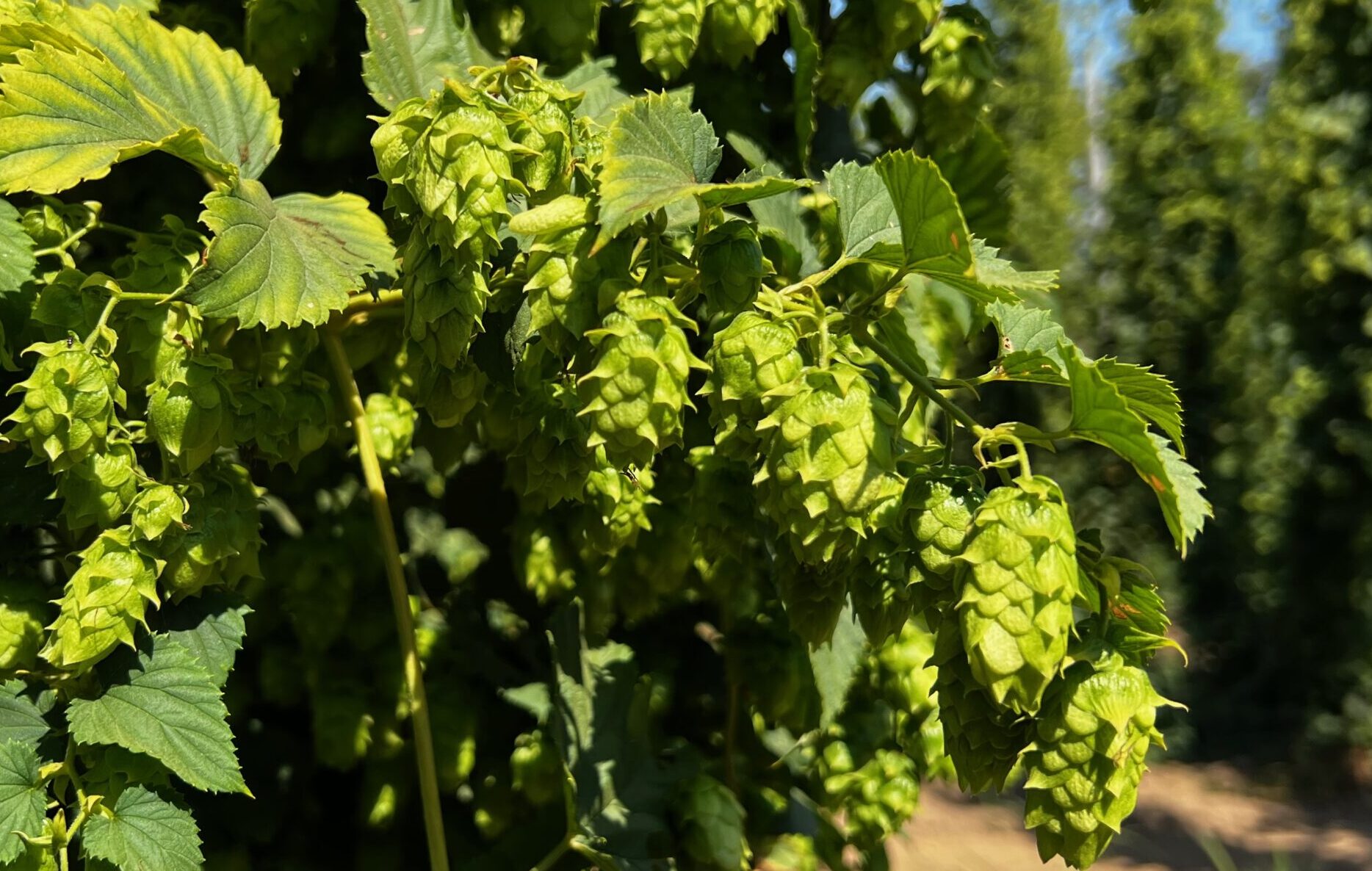
Description: Hop panel version 2 for 3,100 marker loci developed by Breeding Insight at University of Florida in collaboration with DArT and funded by USDA-ARS for public use. DArTag assay uses custom designed oligos to amplify targeted SNPs, and their flanking sequences, prior to Next Generation Sequencing (NGS). The sequenced amplicons are demultiplexed and targeted SNPs/haplotypes are analyzed using DArT P/L’s proprietary pipeline ( https://www.diversityarrays.com/services/targeted-genotying/).
The marker loci were selected from a GBS SNP dataset of 100 representative hop breeding lines for selecting markers on Chr01–ChrX and 56 male lines for selecting markers on ChrY. The panel is suitable for genotyping diploid hop for breeding decisions and selection. Usage of the panel outside of Humulus lupulus has not been tested and could result in higher missing data rates.
Results and Data Sharing: DArT offers multiple data output formats. Users are encouraged to work with DArT to ensure the data type they desire is provided. Users are also strongly encouraged to request the Missing Allele Discovery Counts (MADC) file from DArT when placing orders. This file contains the read counts of each 81-bp michrohaplotype detected in each sample and at each locus. Breeding Insight requests that the MADC file and sample metadata also be sent to bi-genotyping@ufl.edu to be added to the public microhaplotype database for fixed allele naming and public data sharing. Proprietary sample metadata can be privatized in the database for IP protection.
Citation: In preparation. Please contact Breeding Insight for the most up-to-date citation information.